Study Abroad, Overseas Education Consultant

Updated on

about-us

Mechatronics Ausbildung in Germany for Indian Students


If you have completed Class 12 and are looking at technical Ausbildung options in Germany, you have probably already come across Mechatronics Ausbildung. And you may have heard the usual things about it: Germany needs skilled workers, you can earn while you train, and you don't have to take the university route.

All of that sounds attractive. But before you decide that Mechatronics is the right option for you, it is worth understanding what you are actually signing up for.

Mechatronics Ausbildung is a vocational training programme for becoming a Mechatroniker or Mechatronikerin. It is a combination of mechanical engineering, electrical and electronic systems, and automation. You learn the theory at a vocational school and, at the same time, receive practical training in a company.

So this is not a programme where you spend three or four years sitting in a classroom and then start looking for practical experience afterwards. The practical part is built into the training from the beginning.

You could be working with machines, electrical systems, control technology, sensors or automated production equipment. Depending on the training company, your practical work can involve assembling systems, testing them, finding faults, carrying out maintenance or helping to commission machinery.

And this is something we would want you to think about before applying.

Do you actually like technical work?

Not just the idea of working in Germany. Not just the salary. And not because someone told you that Mechatronics has good job opportunities.

If you enjoy understanding how machines work, solving technical problems and working with your hands as well as your technical knowledge, then Mechatronics can make sense. If you are looking for an Ausbildung simply because it is an easier way to get to Germany, you may want to look at other options first.

The Ausbildung itself normally takes three and a half years. During this time, you are learning at the vocational school and training in a company. You are therefore dealing with both the academic side and the expectations of a real workplace.

And for an international student, there is another part that you cannot ignore: German.

You don't need German just to get through the application. You will need it to understand what is being taught, communicate at work, follow instructions and eventually work safely and independently in a technical environment.

That is why, before we talk about salary or the visa process, let's first understand what Mechatronics Ausbildung actually involves and whether your educational background makes you a suitable candidate.

Mechatronics Ausbildung in Germany at a Glance


Factor What you should know
Occupation Mechatroniker / Mechatronikerin
Type of programme Dual vocational training (Ausbildung)
Duration 3.5 years
Training structure Vocational school + practical company training
Main areas Mechanical, electrical, electronic and automation technology
Language German is essential; requirements can vary by employer
Tuition Dual Ausbildung is generally not a university-style tuition programme
Training remuneration Paid during the Ausbildung; amount varies by employer, location and training year
Eligibility Depends on the specific employer and Ausbildung vacancy
Suitable background Mathematics, Physics or technical subjects can be useful
For Indian students Possible, subject to training and visa requirements
Career areas Manufacturing, automation, machinery, maintenance and technical services
After Ausbildung Qualified employment and opportunities for further professional development

Anigdha’s suggestion: Don't treat this table as a checklist where every student automatically qualifies. The exact requirements can differ from one Ausbildung vacancy to another, so we should always check the individual employer's conditions.

In this guide:

  • Mechatronics Ausbildung Overview – What the programme involves and how it works
  • At a Glance Quick Facts – Duration, structure, language, salary, eligibility
  • Why Choose Mechatronics Ausbildung – Benefits, practical training, career fit
  • Eligibility for Indian Students – Academic background, age, subject requirements
  • German Language Requirement – Minimum level and why B2 is recommended
  • What You Will Learn – Mechanical, electrical, automation, and software skills
  • Salary During Ausbildung – Typical range (€800–€1,300 gross/month) and factors affecting pay
  • Visa Process for Indian Students – Steps from contract to national visa
  • Career Opportunities After Ausbildung – Industries, employers (Siemens, Bosch, BMW, VW), and post?training salaries (€2,800–€3,600+)
  • Ausbildung vs Engineering Degree – Key differences in structure, focus, and outcomes
  • Application Process – CV, motivation letter, interview preparation
  • Documents Checklist – Certificates, German language proof, passport, technical records
  • Common Mistakes to Avoid – Salary fixation, ignoring German, weak applications
  • Support from Anigdha – Counselling, CV help, interview prep, visa guidance

What is Mechatronics Ausbildung in Germany?


Let's first clear up what Mechatronics Ausbildung actually means, because the name can make it sound more complicated than it is.

The German occupation is called Mechatroniker / Mechatronikerin. In simple terms, it is a technical profession where you work with systems that combine mechanical, electrical, electronic and automation technology.

Think about an automated production line in a factory. It isn't purely mechanical. There are motors, electrical circuits, sensors, control systems and software working together. A Mechatroniker is trained to understand these different parts and, more importantly, to work with the complete system.

During the Ausbildung, you learn things such as assembling and installing components, testing systems, reading technical drawings and circuit diagrams, commissioning equipment, finding faults and carrying out maintenance and repairs.

This is why we don't usually recommend choosing Mechatronics just because you are “interested in engineering.” That's too broad.

Ask yourself what kind of engineering or technical work actually interests you.

If you like machines, electronics, automation, robotics and practical problem-solving, Mechatronics could be a good fit. If what you really want is a university engineering degree and the academic route that comes with it, then you should compare Ausbildung with an engineering degree before making your decision.

How does the Ausbildung work?


Mechatronics Ausbildung follows Germany's dual vocational training system.

You don't only study at a vocational school. You train with a company as well.

At the Berufsschule, you learn the theoretical and technical side of the occupation. At the Ausbildungsbetrieb, you put that knowledge into practice and learn how technical work is actually carried out in a professional environment.

That practical experience is one of the biggest differences between Ausbildung and a conventional university programme.

And don't underestimate it.

You aren't simply going to Germany to “study Mechatronics.” You are training for a profession while working in a company.

The standard duration of the Mechatroniker Ausbildung is three and a half years. By the end of the training, the expectation is not that you merely know the theory. You should have developed the practical and technical skills required to work as a qualified Mechatroniker.

So, if you're still at the stage of thinking, “I like machines, so maybe Mechatronics is for me,” that's fine. But don't stop there.

The next question is much more important: What will you actually learn during those three and a half years?

Why Choose Mechatronics Ausbildung in Germany?


This is usually where students start looking at the numbers. How much will I earn? Is the Ausbildung free? Will I get a job afterwards?

Those are fair questions. But we would suggest looking at the training itself first.

One of the main reasons students consider Mechatronics Ausbildung in Germany is that it gives you the opportunity to learn a technical profession while gaining practical experience in a company. You are not waiting until after graduation to find out what working in the industry is actually like.

You also receive training remuneration during the Ausbildung. The amount depends on factors such as the employer, location, industry and year of training, so you should not make your decision based on one salary figure you find online.

The practical side is another important advantage.

If you are the kind of student who finds it easier to understand something when you can actually see it, work with it and troubleshoot it, a dual Ausbildung can suit you better than a purely classroom based route.

You may work with machinery, electrical systems, electronic components, sensors, control systems and automated equipment. Over the course of the training, you gradually take on more technical responsibilities.

There is also a career reason to consider this route. Mechatronics is used across areas such as manufacturing, automation, machinery and industrial production. The German Federal Employment Agency describes the occupation as involving the assembly, commissioning, maintenance and repair of complex mechatronic systems, including automated production equipment and industrial robots.

But here is something we would not want you to overlook.

A good career opportunity does not automatically mean the Ausbildung is right for you.

You have to be comfortable with technical subjects. You have to be willing to learn German properly. You also need to be prepared for the discipline of working in a company while studying at a vocational school.

If you are choosing Mechatronics because you genuinely want a hands-on technical career, the combination of training and workplace experience can be a strong advantage.

If your only reason is, “I want to go to Germany and Ausbildung seems cheaper than university,” that is not enough.

Before you start applying, you need to know whether your educational background, subjects and German language level make sense for this particular Ausbildung.

Mechatronics Ausbildung Eligibility in Germany


Mechatronics Ausbildung in Germany for Indian StudentsIf you're planning to apply after Class 12, the first thing to know is that there is no single school-leaving qualification required for every dual Ausbildung. The employer decides what they expect from applicants.

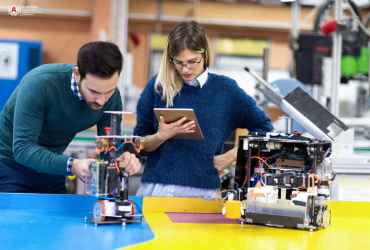
For Mechatronics, however, a background in Mathematics, Physics or other technical subjects can be helpful because the training involves mechanical, electrical and electronic systems.

Can I do Mechatronics Ausbildung after Class 12?

Yes, you can apply after Class 12 if you meet the requirements of the specific employer and the applicable visa conditions.

Do I need Science?

Not necessarily for every vacancy. But if you have studied Mathematics and Physics, it can give you a stronger foundation.

If you have a technical diploma, vocational qualification, internship or relevant project experience, include it in your application.

And remember, being eligible to apply does not mean you are automatically a strong candidate. Your academic background, German, technical interest and overall profile will still matter.

German Language Requirement for Mechatronics Ausbildung


German is not something you can treat as a formality when applying for Mechatronics Ausbildung in Germany.

You will need German to understand your vocational classes, communicate with colleagues, follow workplace instructions and understand technical terminology.

B1 is generally the minimum level used for vocational training, but the actual requirement can vary between employers and programmes. For Mechatronics, we would recommend working towards B2, especially if you are not comfortable with technical German yet.

And don't make the mistake of thinking, “I have passed B1, so my German is done.”

You may be able to manage everyday conversations at B1, but understanding a technical explanation about a machine, electrical system or fault is a different matter.

Your goal should not just be to get the certificate. It should be to understand what is happening around you at work.

What Will You Learn in Mechatronics Ausbildung?


The training combines mechanical, electrical, electronic and automation technology. You learn both at vocational school and through practical training with your employer.

Some of the main areas include:

  • Mechanical systems and components

  • Electrical and electronic systems

  • Sensors and control technology

  • Technical drawings and circuit diagrams

  • Automation and industrial systems

  • Installation and commissioning

  • Programming and software

  • Maintenance and troubleshooting

The practical part is important. You are not only learning how a system works in theory. You are also learning how to assemble, test, maintain and repair it in a real working environment.

So if you are expecting a course that is mostly classroom-based, Mechatronics Ausbildung may not be what you have in mind. This is training for a hands-on technical profession.

How Long Does Mechatronics Ausbildung Take?


The standard Mechatronics Ausbildung is 3.5 years.

During this period, you combine vocational school with practical training at your company. You are learning the technical knowledge required for the occupation while also developing the practical skills you will need in the workplace.

So don't think of these three and a half years as simply “studying.”

You will be expected to learn, work, follow instructions, develop technical skills and prepare for your vocational examinations.

It is a professional training programme, not just a classroom course.

Mechatronics Ausbildung Salary in Germany


Mechatronics Ausbildung Salary in Germany One of the first things students ask us is, “How much will I earn during Mechatronics Ausbildung?”

Yes, you receive training remuneration during the Ausbildung. On average, trainees in Mechatronics Ausbildung earn between €800 and €1,100 gross per month in the first year, with the amount usually increasing in the second and third years. By the final year, remuneration can reach €1,200–€1,300 gross per month, depending on the employer, industry, and location.

But don't make the mistake of choosing an Ausbildung only because you saw a particular salary figure online. The amount can vary depending on the training company, location, industry and year of training. Also remember that the amount advertised is generally a gross figure, so your actual take-home amount will be lower after applicable deductions.

When you compare Ausbildung offers, look at the complete picture. A slightly higher remuneration may not mean more money left at the end of the month if the training is in a much more expensive city.

So when someone tells you, “Mechatronics Ausbildung pays €X,” don't stop at that number. Ask instead:

  • How much is the actual remuneration?

  • What will I take home?

  • Where is the Ausbildung located?

  • What will my monthly living costs be?

  • That is the comparison that actually matters.

Is Mechatronics Ausbildung Free in Germany?


This is another point where students often get confused.

You may hear that Ausbildung in Germany is free, but that does not mean you can move to Germany without spending any money.

In a dual Mechatronics Ausbildung, you generally do not pay university-style tuition fees for the vocational training. Instead, you train with a company and receive training remuneration. But you still have your own living expenses. You need to plan for things like:

  • Accommodation and rent

  • Food

  • Local transport

  • Phone and internet

  • Personal expenses

  • Initial travel and settlement costs

So don't calculate your budget by asking only, “Is the Ausbildung free?”

The more useful question is:

“After my training remuneration and monthly expenses, will I be financially comfortable?”

That is something we would want you to check before accepting an Ausbildung offer. A good offer is not necessarily the one with the highest remuneration. The location and your actual living costs matter too.

Can Indian Students Apply for Mechatronics Ausbildung in Germany?


Yes. Indian students can apply for Mechatronics Ausbildung in Germany if they meet the requirements of the particular training position and the relevant visa requirements.

If you're applying from India, we would suggest thinking about the process as a sequence rather than jumping straight into applications.

Class 12 or relevant qualification → German language → eligibility check → documents → Ausbildung applications → interview → training contract → visa → Germany

You don't necessarily need previous professional experience to start an Ausbildung. What matters is whether your education, technical interest, German language skills and overall profile make sense for the position you are applying for.

And one thing we would strongly recommend: don't apply to every technical Ausbildung you find just because the word “Ausbildung” is attached to it.

First understand what a Mechatroniker actually does. Then decide whether that is the kind of work you want to build your career around.

How to Find Mechatronics Ausbildung Vacancies in Germany


Finding the right Mechatronics Ausbildung vacancy is not just about finding a company that is hiring. You also need to check whether the training position fits your education, German level, location and career plans.

You can look for vacancies through the Federal Employment Agency, company career pages and other reputable Ausbildung portals.

When you find a vacancy, don't just look at the salary.

Check:

  • Start date

  • Training duration

  • Location

  • Educational requirements

  • German language requirement

  • Training remuneration

  • What the practical training involves

  • Whether the company provides or helps with accommodation

And please don't apply blindly to hundreds of vacancies using exactly the same CV and motivation letter. If the company is asking for something specific, address it in your application.

The goal is not to collect as many applications as possible. The goal is to find Ausbildung positions where your profile actually makes sense.

How to Apply for Mechatronics Ausbildung in Germany


Once you have found suitable vacancies, the next step is to prepare your application properly.

For most students applying from India, this usually means preparing a German CV (Lebenslauf), motivation letter, academic documents and your German language certificate.

Your application should make it clear why you are interested in Mechatronics, not just why you want to move to Germany. If you have studied Mathematics or Physics, completed a technical project, done an internship or have any practical experience with machines, electronics or technology, mention it.

Then comes the interview. Be prepared to explain:

  • Why you chose Mechatronics

  • Why you want to do an Ausbildung

  • What you know about the occupation

  • Your educational background

  • Your German language level

  • Your technical interests

And don't memorise a five-minute answer and repeat it word for word. Employers want to see whether you actually understand what you are applying for.

A strong application is not about making yourself sound impressive. It is about showing the employer that you understand the occupation and have a genuine reason for choosing it.

What Documents Do You Need for Mechatronics Ausbildung?


Before you start applying, get your documents ready. Waiting until you receive an interview invitation is only going to create unnecessary pressure.

For an application from India, you will generally need documents such as:

  • Passport

  • Class 10 certificate and marksheet

  • Class 12 certificate and marksheet

  • German language certificate

  • German CV or Lebenslauf

  • Motivation letter

  • Technical certificates, if you have them

  • Internship or project certificates, if relevant

If you have a diploma or other technical qualification, keep those documents ready as well.

Later, once you receive an Ausbildung offer, you will need additional documents for the contract and visa process. The exact requirements can depend on your situation and the particular authority handling your application.

So our advice is simple: prepare your documents before you start applying, not after you get selected.

Mechatronics Ausbildung Interview


If your application gets shortlisted, the interview is where the employer starts looking beyond your certificates. You should be ready for basic questions such as:

  • Why do you want to become a Mechatroniker?

  • Why did you choose Ausbildung instead of university?

  • What do you know about Mechatronics?

  • Which technical subjects did you study?

  • Why do you want to train in Germany?

  • How good is your German?

  • Have you done any technical projects or internships?

You may also be asked questions related to Mathematics, Physics or basic technical concepts, depending on the employer and the training position.

But don't prepare for the interview by memorising answers from the internet.

If you say you are interested in Mechatronics, the interviewer may naturally ask what interests you about machines, electronics or automation. You should be able to answer that in your own words.

And if your German is still developing, don't try to hide it by memorising complicated sentences.

Mechatronics Ausbildung Contract


Once a company selects you, you may receive an Ausbildungsvertrag, which is your training contract. This is an important document, so don't sign it simply because you are excited about finally getting an Ausbildung in Germany.

Read the contract carefully and check the important details, including:

  • Training start date

  • Duration

  • Training location

  • Monthly remuneration

  • Working hours

  • Probation period

  • Vocational school arrangements

  • Practical training arrangements

  • Accommodation, if the company offers it

Also check whether the details in the contract match what you were told during the application and interview process.

If an agent or intermediary helped you find the position, make sure you understand who your actual employer is and what exactly you have been offered.

A training contract is not just paperwork for the visa. It defines the training relationship you are entering into.

Take your time, read it properly, and ask questions before signing anything you don't understand.

Mechatronics Ausbildung Visa for Indian Students


If you are applying from India, you will generally need a national visa for vocational training before travelling to Germany. The process starts only after you have secured a suitable Ausbildung position and received your training contract.

The process is straightforward:

  • Secure an Ausbildung contract

  • Prepare your visa documents

  • Meet the German language requirement, normally B1

  • Show that your living costs are covered

  • Submit the national visa application

  • Attend the required appointment and provide biometrics

  • Wait for the visa decision

  • Travel to Germany and complete the required residence formalities

For a company-based Ausbildung, your training remuneration can count towards proof of financial means. In 2026, the official threshold is €1,048 gross or €822 net per month. If your remuneration is lower, the difference can generally be covered through additional financial proof such as a blocked account or declaration of commitment.

One thing we would strongly advise students not to do is treat the visa as a formality. Getting an Ausbildung contract is an important step, but you still need to meet the visa requirements and submit the documentation correctly.

For applications from India, use the German Federal Foreign Office's Consular Services Portal and select the German mission responsible for your place of residence.

What Is Mechatronics Ausbildung Like in Germany?


Once you arrive in Germany, you will combine vocational school with practical training in your company. You will learn technical subjects, work with machinery and systems, follow safety procedures and communicate with colleagues in German.

The first few months may take some adjustment, especially if this is your first experience in a German workplace.

The important thing is to keep improving your German and be willing to ask questions.

Remember, you are not only studying. You are training for a real profession.

Mechatronics Ausbildung vs Engineering Degree


The important difference: Ausbildung is not a cheaper version of an engineering degree. They are different pathways.

Factor Mechatronics Ausbildung Engineering Degree
Type of education Vocational training University education
Main focus Practical technical skills + theory Engineering theory, design and technical concepts
Duration Usually 3.5 years Usually 3 to 4 years for a Bachelor's degree
Training structure Vocational school + company training Mainly university-based study
Practical experience High, because you train directly in a company Depends on the degree and internships
Earning during training Yes, trainees receive remuneration Usually no salary for simply studying
Tuition Generally no university-style tuition for dual Ausbildung Depends on the university and programme
Entry route Ausbildung application + employer selection University admission requirements
Qualification Recognised vocational qualification Academic Bachelor's/Master's degree
Typical work Installation, maintenance, troubleshooting, automation and technical systems Engineering, design, development, analysis and technical planning
Best suited for Students who prefer hands-on technical work Students who prefer academic and engineering-focused study
Career progression Can build experience and pursue further professional qualifications Can progress through higher academic qualifications and engineering roles
Key consideration You are training for a specific profession You are studying a broader academic discipline

Career Opportunities After Mechatronics Ausbildung


Once you complete the Ausbildung and qualify as a Mechatroniker, you can look for work in industries where mechanical, electrical and automated systems are used.

Common areas include:

  • Manufacturing and production

  • Industrial automation

  • Machinery and equipment

  • Maintenance and servicing

  • Electrical and electronic systems

  • Robotics and control technology

Your first job will depend on the company you trained with, your practical experience and the type of work you performed during your Ausbildung.

Major German companies such as Siemens, Bosch, BMW, Volkswagen, and ZF Friedrichshafen regularly train and employ Mechatroniker. These names are well?recognized globally and strengthen your career prospects.

Further Study After Mechatronics Ausbildung


Completing your Mechatronics Ausbildung does not mean your technical education has to stop there.

Once you have qualified and gained some work experience, you can consider further professional qualifications or specialised training. Depending on your long-term goals and eligibility, you may also explore higher-level technical or academic education.

But don't rush into another qualification simply because you think you need one. If you are already working in a technical field you enjoy, gaining practical experience and specialising in an area such as automation, control technology or industrial systems may be more useful for your career. The right next step depends on where you want to go after your Ausbildung.

First build the foundation. Then decide whether you need another qualification to reach your particular career goal.

Is Mechatronics Ausbildung Right for You?


Before you apply, take a step back and ask yourself whether you actually fit the profession.

Mechatronics can be a good choice if you:

  • Enjoy technical and practical work

  • Are comfortable with Mathematics and Physics

  • Like understanding how machines and systems work

  • Are interested in automation, electronics or robotics

  • Are willing to improve your German

  • Prefer learning through practical experience

But if you dislike technical subjects or are choosing Mechatronics only because you want to move to Germany, we would suggest reconsidering your choice.

Mechatronics Ausbildung Application Checklist


Before you start sending applications, make sure the basics are actually ready.

Your checklist:

  • Class 10 and Class 12 documents

  • German language certificate

  • German CV or Lebenslauf

  • Motivation letter

  • Passport

  • Technical certificates, if applicable

  • Internship or project certificates, if applicable

  • Ausbildung vacancies matching your profile

  • Interview preparation

  • Financial and visa documents for the later stage

Don't wait until you find an employer to start organising everything.

A common mistake is applying first and then realising that the German certificate, documents or CV are not ready.

Get your profile ready first. Then start applying strategically.

Common Mistakes Students Make


To help you make an informed decision, we have created a list of some of the most common mistakes most Indian students make while choosing and applying for an Ausbildung programme:

  • Applying without checking the employer's requirements

  • Using the same CV and motivation letter for every vacancy

  • Choosing an Ausbildung only because it leads to Germany

  • Underestimating the importance of German

  • Looking only at the training salary

  • Ignoring rent and living costs when comparing offers

  • Waiting until selection to prepare documents

  • Not researching the actual Mechatroniker profession

  • Memorising interview answers instead of understanding the role

  • Assuming an Ausbildung contract automatically guarantees a visa

Why Choose Anigdha for Mechatronics Ausbildung?


Choosing an Ausbildung is a career decision, not just an application process. At Anigdha, we help students understand whether Mechatronics Ausbildung actually fits their academic background, interests and long-term goals before they start applying.

Our support can include:

  • Career counselling and profile assessment

  • German language preparation

  • Eligibility guidance

  • CV and motivation letter support

  • Ausbildung application assistance

  • Interview preparation

  • Training contract guidance

  • Visa guidance

  • Pre-departure support

The aim is simple: help you choose the right pathway and prepare properly for it, rather than simply sending applications and hoping for an offer.

Conclusion

If you genuinely enjoy technical work, Mechatronics Ausbildung can be a strong career route in Germany. You earn while training, gain practical experience and qualify for a skilled technical profession.

But it is not a shortcut to Germany. You need the right academic background, sufficient German, a suitable Ausbildung position and the willingness to work in a technical environment.

If the profession suits you, it can be worth it. If Germany is your only motivation, look at other options before applying.

FAQs


Can I do Mechatronics Ausbildung after Class 12 in India?


Yes. You can apply after Class 12, but the exact academic requirements depend on the employer and vacancy.

What German level is required for Mechatronics Ausbildung?


For the vocational-training visa, B1 German is normally required, although the actual requirements can vary depending on the training situation and employer. For technical training, we recommend aiming higher if possible because you will need to understand technical instructions and workplace communication.

Is B1 German enough for Mechatronics Ausbildung?


B1 may meet the general visa requirement, but don't confuse meeting a requirement with being comfortable at work. Technical German can be considerably harder than everyday German.

How long is Mechatronics Ausbildung in Germany?


The standard Mechatroniker Ausbildung lasts 3.5 years, or 42 months.

Do I get paid during Mechatronics Ausbildung?


Yes. In a dual Ausbildung, you receive training remuneration from the company. The amount depends on factors such as the employer, location, industry and training year.

Is Mechatronics Ausbildung free in Germany?


Dual Ausbildung generally does not involve university-style tuition fees, but you still need to budget for rent, food, transport and other living expenses.

Can Indian students apply for Mechatronics Ausbildung in Germany?


Yes. Indian applicants can apply if they meet the requirements of the specific training position and the applicable visa requirements.

Do I need previous work experience?


Not necessarily. Previous technical experience can strengthen your application, but an Ausbildung is designed to train you for the profession.

Where can I find Mechatronics Ausbildung vacancies?


You can search through the Federal Employment Agency, the Make it in Germany job portal, company career pages and reputable Ausbildung platforms.

Is an Ausbildung contract enough to get the German visa?


No. An Ausbildung contract is an important requirement, but you must still satisfy the applicable visa requirements, including language and financial requirements.

Can I apply for an Ausbildung visa without having an Ausbildung contract?


There is also a specific visa for seeking a vocational training place, subject to additional requirements such as B1 German, an eligible school-leaving qualification, an age limit and proof of funds.

What jobs can I get after Mechatronics Ausbildung?


Career areas include manufacturing, industrial automation, machinery, maintenance, electrical and electronic systems, robotics and control technology.

Is Mechatronics Ausbildung better than an engineering degree?


Neither is automatically better. Ausbildung is a vocational route with substantial workplace training, while an engineering degree is an academic pathway. The right choice depends on the type of career and learning environment you want.

Is Mechatronics Ausbildung a good option for Indian students?

It can be, particularly for students who genuinely enjoy mechanical, electrical, electronic and automation work. But your decision should be based on career fit, not simply the opportunity to move to Germany.

Is Mechatronics Ausbildung a good option for Indian students?


It can be, particularly for students who genuinely enjoy mechanical, electrical, electronic and automation work. But your decision should be based on career fit, not simply the opportunity to move to Germany.

About the Author

Swati Ahuja

Swati Ahuja

Senior Counsellor and Writer

At Anigdha, we understand that choosing to study abroad is rarely difficult because students cannot find information. The real challenge is knowing which information is reliable, relevant and applicable to your situation. Our study abroad guides are written around the questions students and parents regularly ask during counselling — from choosing the right country, university and course to understanding admission requirements, eligibility criteria, tuition fees, scholarships, student visas and application processes. Our Writing & Editing Team researches official university and government sources, admission requirements and current study abroad processes before publishing. Important content is reviewed and updated when university policies, visa rules, application procedures or other requirements change. We do not believe there is one study abroad pathway that works for every student. Our goal is to explain your options clearly, highlight the factors that can affect your decision and help you make an informed choice based on your academic background, career goals, budget and preferred study destination.

Student Testimonials

"I was totally confused about choosing an affordable destination to pursue my Masters. I contacted Mr. Amitabh Sharma at Anigdha for support. He was quite helpful and guided me regarding the complete procedure for Studying MS in Mechanical in Germany. I am currently in my 2nd Semester at university. So far, it has been a very smooth experience."

DorjeAngmo

Dorje Angmo

Arunachal Pradesh

"Ms. Nimisha not only helped me find the right country and college to study Medicine, he also helped my find affordable accommodation and also arranged my visa documentation. I am happily studying at Varna Medical University in Bulgaria from last 1.5 years. I highly recommend Anigdha to all Indian medical aspirants."

MohiniShekhawat

Mohini Shekhawat

Rajasthan

"I am grateful to Anigdha to help me get admission in Irkutsk State Medical University, Russia. I strongly recommend them as the efficient faculty booked my seat for the course and helped me find accommodation!"

ShaliniSharma

Shalini Sharma

Delhi

"I just wanted to say that I am so glad I found Anigdha Overseas Consultant. They have helped me a lot in exploring my educational options in Poland, and for this, I am grateful."

Kajal Singh

Kajal Singh

Delhi

"I wanted to study abroad, and I was always looking online to find a reputable university in Poland. Unfortunately, I couldn't find any institution that would be able to offer me the academic programs that I was looking for. Luckily, with help from Anigdha Overseas Consultant, I found a perfect one!"

Gyandeep

Gyandeep

Punjab

"I am a student who was looking for guidance to pursue my higher education in Bulgaria. I contacted Anigdha, and they were very helpful and supportive throughout the process. They made me feel confident about my decision. Now, I have started a course at one of the best universities in the country."

Rakesh Kumar

Rakesh Kumar

Delhi

BOOK A FREE 30 MINUTE ONLINE COUNSELLING